Why I built The Leap Europe
That experience changed how I believe study-abroad guidance should work.
My family spent approximately ₹5 lakhs across two consultancies because we believed personalised support would make an unfamiliar process easier.
Instead, I received generic documents and broad university suggestions. I still had to research programmes, write my own story, understand the visa process, and make the important decisions myself.
I eventually reached SKEMA Business School in Paris and later moved to Germany, but the process showed me how isolating study-abroad planning can feel when the advice is not truly personal.
The Leap Europe is the guidance I wish my family and I had received.
It is founder-led, intentionally small, and built around honest conversations, original applications, and decisions that make sense for the student — not around university commissions.
About the founder
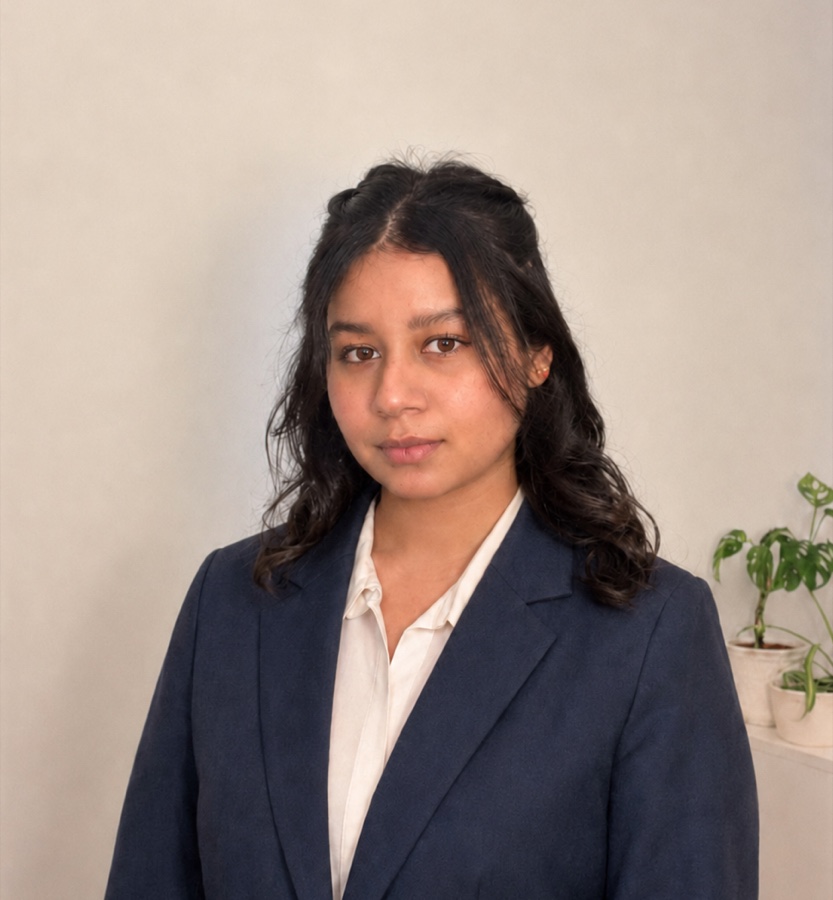
I grew up in India and completed a BSc in Economics and Mathematics at Miranda House, University of Delhi. I then moved to Paris for a Master's in Strategic Management and Consulting at SKEMA Business School. I am now based in Saarbrücken, Germany, where I work in communications and marketing.
Paris was my first experience of living outside India. The first days were difficult: everything was unfamiliar, and I had to learn quickly how to manage academics, administration, money, and life in a new country.
I had paid for consultancy support before leaving India, but much of the research and decision-making still fell to me. That experience taught me that students need more than a university list. They need context, honest trade-offs, and someone who understands why every decision feels so important.
Since then, I have supported students and families through workshops, mentoring, and individual conversations. I understand the questions Indian families carry about finances, safety, career outcomes, and whether studying abroad is genuinely the right choice.
I do not take commissions from universities, and I keep the student intake deliberately small. Every application should sound like the person submitting it — never like a template.
My background
How I work
Not a description of a philosophy — a description of the weeks.
The first conversation is about your marks, your degree, your money and your timeline, in that order, because those four things decide most of what is possible. I would rather establish in the first hour that your target intake is unrealistic than discover it in March when the deadline has passed. If Germany is not the right country for what you want to study, I will say so.
Your statement of purpose comes from your own material and stays in your own words. My job is to ask why you chose this field until the answer is specific enough to be interesting, to point out the paragraph that says nothing, and to check the claim you made that the transcript does not support. You write it. I make it harder to ignore.
Most avoidable failures in Indian applications are sequencing failures, not quality failures — APS started too late, a VPD not requested for the one university that needed it, a language certificate booked after the deadline it was needed for. We work backwards from the earliest binding date and I keep the list.
I would rather answer a parent's question about money directly than have it relayed through a nervous nineteen-year-old. Parents are on the calls, and the financial picture is laid out in full before anyone commits to anything.
Registration, bank account, insurance, housing, the first weeks. This is the part I remember most sharply from Paris, and it is the part almost nobody prepares students for.
Being clear about limits
If your profile is not competitive for the universities you have named. If your timeline no longer works for the intake you want. If the money does not add up, including the part of it your family has not budgeted for yet. If another country would serve your actual career goal better than Germany. And if I think you would do fine on your own and do not need to pay anyone — that has happened, and I would rather say it.
I am not an immigration lawyer or a visa adviser, and I do not give legal or immigration advice. I am not a representative or agent of any university, and I take no commission from any of them. I do not work inside an admissions office and I cannot tell you what a committee will decide. I am not a German language teacher — I can tell you which certificate a programme asks for, not teach you to pass it.
Where a rule can change — proof of funds, visa conditions, work permissions, exam requirements — the authority is the official source, not me. I will point you at it, and where it is genuinely ambiguous I will say that too rather than guess confidently.
The questions you are weighing are the right ones: what it costs in total, what happens if it does not work out, whether your child will be safe, and whether the person guiding them has actually done this. On the last one — I moved to Paris at 22 with no network, and I now live and work in Germany. My education and my employment history are both on LinkedIn and you are welcome to check them.
On the first two: I will not give you a guarantee, because nobody honest can. What I will give you is the full cost picture, including the parts that are usually left out, before you commit to anything. Start with the free Germany guide — it is written to be read by a parent as much as a student.
Important
I keep the intake to ten because I am doing this alongside a full-time role in Germany, and ten is genuinely the number of applications I can hold in my head at once. I do not want fifty students. I want ten I know by name, whose parents I have spoken to, and whose deadlines I could recite.
That has a consequence worth stating openly: I turn people away, including people who are willing to pay. If your timeline does not work, or the fit is not there, saying yes would be taking money for something I could not do well.
If you want an application processed at volume, that is a real service and other people provide it. What I offer is narrower and slower, and it is not the right choice for everyone.
Not sure yet?
I know this is a serious decision. I know your parents need to trust the person guiding their child. I would feel the same way.
Every time I have 5 interested students, I host a small free group call. You meet me, hear my story, ask anything. Your parents can join. No pitch, no pressure, no slides.
This is completely optional. If you already feel ready, request a profile evaluation directly. The open session is for families who want to meet me first — and I completely understand that.
Request a profile evaluation, message on WhatsApp, or meet Anushka in a free open session before you decide.
Or DM "open session" to meet me before you decide